Saying ‘non’ to Schengen: or how a visa refusal can challenge the system

Image

A Non-Schengen ticket…

“Non, merci”. These simple words have caused a stir, embarrassing France and Europe as a whole in the process. What I am referring to is the symbolic gesture that a young Senegalese woman, Bousso Dramé, performed last week after the French consulate in Dakar had granted her a visa to travel to Europe. She really wanted to go to Paris. And she well deserved it (the trip was the prize for winning a French writing contest). Yet, she declined. We often hear stories about visa applicants, especially in developing countries, being turned down by callous European officials. Not this time. Drame turned them down. And she did not do it silently. She wanted to let the consulate officials know why she did it  – because of the way she was (mis)treated during the application process. She also wanted everybody else (in Africa and beyond) to know. And she wanted to make a statement about the humiliation that many people like her have to endure in order to get to Europe. That is why she put all her bitterness in writing, in a composed yet powerful j’accuse against a ‘system’ that she feels is profoundly unjust, which pretends to be objective but whose main raison d’être seems to be that of keeping unwanted people out of Europe.

Drame’s gesture has made me think about other symbolic performances that target Europe’s visa system, in this case using art as their main ‘weapon’. What I have in mind is what Milevska  calls ‘Non Schengen Art’[1]. The common theme addressed by non–Schengen artists is the impact of the Schengen border regime on the everyday life of Eastern European citizens (those holding passports of countries that are not yet Schengen members). In order to present their work in Western Europe, these artists (themselves citizens of ‘Non Schengen’ countries) need to obtain a visa. To challenge what they perceive as a clamp down on their freedom of expression, they conjure up performances, objects, installations, and video or photography projects that are clandestine attempts for finding a way to trick the political system and bureaucratic procedures. These performances are often based on illegal tactics that mirror the creative ways in which would-migrants try to sneak across Europe’s external borders, such as faking passports, bribing officials, avoiding surveillance cameras, overstaying visas, white weddings, etc. Their criticism of the Schengen regime, rather than overt and outspoken, is evoked by their actions. They are not just representing an illegal migrant in their art; they are performing it. Thanks to these performances, art becomes part of everyday life. But the artists’ objective is not to reify the ‘everydayness’ that Schengen represents, but to disrupt it from within.

The Serbian author Tanja Ostojić, for instance, in her performance Crossing Borders, realized in 2000, the author illegally crossed the border between Slovenia and Austria. When she crossed the border, Slovenia was still a non Schengen country, and its borders with the EU were heavily fortified. According to Ostojić, the journey was possible only because of the help she received from her Austrian friends who accompanied her in the treacherous trek across the Slovenian-Austrian border. The final objective of the work of Ostojić and other members of the Non Schengen Art movement is to unveil Schengen’s exclusionary underpinnings. Their artistic performances thus engage with ‘the system’, if only as a means to debunk it from within. This is precisely what Drame’s ‘spectacular’ gesture seems to be doing. The power of  a ‘non’…


[1]  Milevska, Suzana, “Non-Schengen art: the phantasm of belonging”, paper presented at the UCL school of Slavonic and East European studies 7th annual international postgraduate conference, Inclusion Exclusion, University College London 16-18th February 2006

Much ado about nothing..new? On the latest ‘Schengen governance package’

Any surprise in the Schengen package

Any surprise in the Schengen package?

Finally! After a tortuous two year gestation, Europe’s triumvirate – pardon, Troika (European Parliament/Council/Commission) -has agreed upon a package of proposals aimed at rendering Europe’s border control regime more effective and predictable. The push for reform came in the aftermath of the spat between France and Italy over the handling of migrants crossing the Mediterranean in the wake of the 2011 Arab spring.  The main issue arising from this affair was the need to clarify (and possibly expand) the nebulous rules about the re-imposition of national border controls in cases of “serious threat to public policy or internal security”. At first sight, this seems to be just a technical issue. Only boring policy wonks (like me) could consider interesting (exciting?) questions such as ‘How many days can a member state re-impose border controls?’, ‘Under what conditions?’, ‘How and when should EU institutions be informed?’. What a snooze! Well, maybe not so much. These questions are actually more intriguing than they might seem at first sight. Forget for a moment the technocratic language in which the current public debate about the Schengen governance package has been couched (an art the EU is very good at). If we scratch the surface we can see that at the core this matter is eminently political. And with politics, comes drama! The issue here is the ongoing power struggle among the EU triumvirate over the distribution of competences within the Schengen regime. In other words: who is in charge? How else should we read then the posturing, maneuvering, arm twisting that has characterized the Schengen reform saga in the last two years? (Emblematic here is the EP’s ‘nuclear option’ of boycotting the negotiations over the justice and home affairs agenda if the Council did not withdraw the ‘outrageous’ decision to purge the parliament from the Schengen evaluation process)

This is Schengen politics at its best (or worst, depending on the perspective). Pragmatism, especially the reliance on ad hoc and flexible institutional arrangements and procedures, is in Schengen’s DNA, a trait which Europe’s border control regime acquired in its early intergovernmental days outside the EU and that it has not completely got rid of after its communitarization in the late 1990s. Indeed, I would go a step further and argue that its incorporation in the EU has not really de-Schengenized Schengen; looking at the EU today I see the ongoing Schengenization of the EU, not the other way round…. This pragmatism is only superficially a-political. Political is in fact the move of depoliticizing highly contentious issues by repackaging them as merely technical matters and by sheltering the policy-making process from the public eye.

It is in this pragmatist light that we should read the latest announcement about the Schengen ‘package’. The fact that a compromise was reached (the establishment of an evaluation and monitoring mechanism  jointly managed by the European Commission and member states; changes to the Schengen border code to include new circumstances in which border controls can be re-instated) despite the tensions and reciprocal threats and vetoes from the major actors involved in this saga, is not such a miracle after all. That’s how Schengen ‘normally’ works. In the past, bouts of what seem existential ‘crises’ that periodically hit the regime, have been solved (at least temporarily, until a new crisis erupts) with the proverbial political pat on the back. What this solution  – political one, since political crises cannot be solved if not through political solutions – comes down to is a revamping of old tacit rules, vague enough so that everybody can see what one likes. This sleight of hand, however, might not overcome the very problems it sought to address, possibly creating new ones. Are we sure member states are going to allow EU institutions (the Commission, Frontex) to assess their ability to manage their borders and accept their suggestions?  Will member states really wait for the Commission’s evaluation (which could take up months) before re-imposing internal border controls in the case of another member neglecting to fulfill its duties at the common external border?  If the past experience is of any indication, I would not be so optimistic… Indeed, even if the rules of the game have now been more clearly spelt out, it is obvious that they can be interpreted with substantial latitude. With Schengen, the main culprits are typically member states, but EU institutions are quite apt in the art of liberal (i.e. expansive) reading of agreed upon rules. What do we make of all that? Well, the same old story. Schengen has a capacity to withstand phases of internal turmoil, such as the one that followed the Italo-French spat. The way it manages these recurrent crises is as we humans do when under stress (NB: for those who from time to time stumble upon my blog, you’ve probably noticed my penchant for medical metaphors…). What do we do? Typically, we switch to an ‘emergency mode’. We’re ready for the worst, and act as if the worst can happen. We question our routines, and, if needed, we try to tweak them. We make new resolutions to avoid problems in the future. But this is just a temporary coping strategy. Once we are persuaded that everything is OK, we switch off the emergency mode. And then we return to our previous routine. The Schengen triumvirate seems to be following this path, shaking hands and congratulating themselves for the new deal. Until, of course, a new crisis disrupts the newly achieved consensus and we start hearing calls for ‘clearer rules’… The latest Schengen package reform? Much ado about nothing new…

The Iron Lady’s Schengen legacy: of commonsense, border fixations and Jacobin hubris

And the Schengen flag too?

And the Schengen flag too?

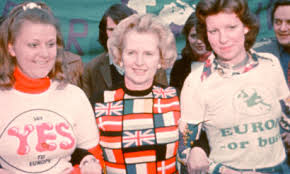
It is a bit of understatement to say that Margaret Thatcher was no Schengen fan. In her vitriolic  attacks on ‘Europe’ as a political project, she did not spare what she believed was an unnerving and ultimately quixotic quest to dilute, and ultimately dissolve, British sovereignty, a quest concocted by naive continentals, or worse still, by faceless bureaucrats in Brussels.  As she put it in the notorious ‘Bruges Speech’, the political manifesto of British Euro-scepticism, “it is a matter of plain common sense that we cannot totally abolish frontier controls if we are also to protect our citizens from crime and stop the movement of drugs, of terrorists and of illegal immigrants.” Commonsensical are also the reasons why national borders should  persist: “I did not join Europe to have free movement of terrorists, criminals, drugs, plant and animal diseases and rabies, and illegal migrants”. (Certainly not the Europe of peace and goodwill that Jean Monnet envisioned…) In Thatcher’s ‘commonsensical world’,  the triad borders/security/state is so ingrained in our collective understanding of what border control means as to not require further explanation. Borders and security are indissolubly linked, and national governments (as opposed to supra-national institutions) should be in charge of this issue. From this perspective, Schengen can only be an aberration.

And yet, despite her visceral opposition to continental Europe’s experimentation with territoriality, Margaret Thatcher has played a fundamental role in the making of Schengen as we know it today. The Iron Lady’s trenchant critiques have set the terms – and the tone – of the debate about this eminently political project. Schengen supporters (be it in Brussels or in European capitals) have had to come to terms, adapt and respond to the ‘nationalist backlash’ that she so powerfully and persuasively unleashed. The former British prime minister also embodied one of the major obstacles (yet to be fully overcome) hindering the full realization of a post-national vision of territoriality in Europe, namely the persistence among European policy-makers and the population at large of what I call ‘border fixation’. Despite claims that traditional territorial boundaries are ‘passé’, borders have not lost their appeal. For some commentators, this fixation is baseless. First of all, advocates of hard borders tend to exaggerate the demand for them. Uncontrollable mass movements of population across frontiers are, after all, rare events. Moreover, borders cannot (and arguably never did) effectively achieve one of the main goals they were established for, namely, preventing unwanted entries into a territory. These arguments are well founded, but they do not take into consideration that the appeal of borders does not stem (or at least not solely) from their ‘material’ functions; instead, it is based on the powerful psychological need for order and stability in a community. The leap required to go beyond this border fixation would therefore entail the embracing of a new type of post-territorial governance where this need is addressed in a different fashion. Europe is not new to far-reaching and ‘unimaginable’ transformations. The Old Continent is a constant work in progress, an open-ended experiment that has been re-adjusted in light of new events or circumstances in the past. Yet, given the current gloomy and inward looking political climate, the conditions to overcome the long-lasting fascination with borders do not seem ripe. And even if they were, we should nonetheless heed to Margaret Thatcher’s admonition about the Jacobin tendencies (viz. radical and hyper-rationalist) that she so strongly despised in the European project:

“…look at the architecture of the last fifty years — look, in particular, at the architecture that went beyond the modern to the futuristic. It was certainly a very dramatic architecture but the one thing it no longer expresses is the Future. What it expresses is yesterday’s vision of the future. C’est magnifique, mais ce n’est pas la politique.”[1]

Schengen’s ‘architects’ seem to have listened to Thatcher’s warning about Europe’s institutional hubris. One of the policy regime’s signature traits is in fact its flexible and pragmatic design, which has allowed it to withstand turbulent times, wobbly political will and recurrent bouts of skepticism during its three decade long history. The Iron Lady would probably balk at the idea, but helping Schengen thrive might well be part of her vast political legacy…


[1] Margaret Thatcher, “Europe’s Political Architecture”, Speech in the Hague, May 15, 1992, Thatcher Archive

Schengen blues: critical (musical) notes on Europe

Schengen bluesThere’s something about Schengen that makes it a favourite subject of creative types of all stripes.  What this ‘quid’ consists of may elude us non artistically inclined mortals. After all, what can be so exciting about an utterly dry catalogue of rules regulating travel in and about the Old Continent? Apparently, a lot. The reasons why Schengen has become a source of artistic inspiration, however, are not necessarily as benign as some European policy-makers (especially those who still hail this policy initiative as one of the finest achievements of European integration) would like us to believe. Indeed, Schengen is often the artistic target of trenchant criticism, especially because of its exclusionary practices vis a vis selected individuals (i.e. the unwanted non-Europeans). This critical streak permeates the entire spectrum of the performative art scene. Musicians play a big part in this anti-Schengen chorus. Europe’s free travel area seems to touch a (metaphorical) cord with this category of artists. After all, is there a better way to voice your opinion (and be heard from afar) than through your own voice, especially if screamed out of your lungs? The latest example of this increasingly popular musical genre (‘Schengen blues’?) that I have recently come across is from the Spanish crooner Raphael (by the way, why would the author of 60s’ hits such as “Cuando tú no estás”, “Mi gran noche”, “Tema de amor”, would pen a song – in French, alas! –  on a topic such as Europe’s border control regime is a question that definitely warrants further investigation…). The song, simply titled ‘Schengen’, poetically evokes the painful experience of the typical migrant living in the Old Continent. The result is a rather depressing portrayal of Europe…

(…)

Tellement de nuits sous la paupière
Tellement de forêts abattues
Même sous la mitraille et le fer
Moi je leur ai rien vendu
Et que même dans l’espace Shengen
Ils ont pas voulu de ma peau

Ce que j’ fais là moi
Je sais pas
Je voulais juste marcher tout droit
Ce que j’ fais là moi
Je sais pas
Je pense à toi depuis mille ans

(…)

(NB: full text and English translation are available here)

Nobel vs. Schengen: reflections on the EU, the peace award ceremony… and John Terry

Awarding the most coveted peace prize to the European Union was no doubt a well-staged coup de théâtre. Not surprisingly, the decision has infuriated the (ever growing) battalion of Euro über-skeptics, who have cried foul. Crowning a freshly minted US president with little to show for as peace-maker (as the Nobel committee did in 2009), baffling as it might sound, can be written off as naive wishful thinking . But the EU? The new leviathan that is currently taking the continent down the drain? The Devil impersonated?  Come on!  The Nobel committee, however, has managed to achieve another, and arguably more difficult, feat, that is to embarrass the pro-EU crowd, especially those in the halls of power who still (claim to) support the European project. They might not dare to say it openly – after all, this prize is a recognition of the positive impact that the Union has had on putting the continent’s history of conflict and destruction behind. In normal circumstances, these kinds of awards are the best you might wish for. But these are not normal circumstances. It is an understatement to say that the EU has gone through better days. A prize now? Awkward…  Indeed, EU leaders might feel the same type of unease that surrounded (then) English football captain John Terry, who in 2009 won a prize as ‘dad of the year[i],  although he was cheating on his wife…[ii]. (In fairness, revelations about the footballer’s extra-curricular activities came ex post facto, unlike the EU case, where the award committee was well aware of the recipient’s current record…).  Intriguing as it might be, this story does not end with the controversial decision taken back in October in Oslo.  Even around the time of the actual award ceremony (known as ‘Nobel days’), the spectacle continues – now taking on the features of the comedie de l’absurd.  As a precautionary measure, Norway – the host country – has decided to reinstate controls at its frontiers to prevent possible troublemakers to ruin the event.  The irony is not lost in this move. Norway, a non EU member who is a member of Schengen – Europe’s border free regime – temporarily has suspended EU rules regarding freedom of movement to celebrate  the Union’s achievements, including – ehm – cross continent freedom of movement. So, while frontier controls are supposedly not an effective tool against cross border criminal activities – as the EU mantra goes –  they are indispensable to protect EU leaders attending a ceremony in which they hail themselves as beacons of freedom. Worth repeating: awkward!

Contradictions are an integral part of politics. After all, politics is the art of the possible,  of rendering the absurd normal and the unacceptable tolerable. Which makes me wonder: might be John Terry heading to Oslo next year (and not for a football game)?

Europe’s anxiety spreads…

The Old Continent’s anxiety is spreading around its fringes. Once again, Schengen docet.

http://www.ibanet.org/Article/Detail.aspx?ArticleUid=d4cfa9d3-7035-48be-8971-063c4c8fa657

The Schengen visa…and jesus

Getting a Schengen visa on time? It is often beyond the control of us mortals. So maybe somebody up there can help….

http://www.prayerrequest.com/topic/124176-let-me-get-a-schengen-visa-this-week-i-ask-in-christ-jesus-name-amen/

Making sense of Schengen’s contradictions

What a snub! Last June,  the European parliament (EP),

Twisted & thorny

in an unprecedented move, suspended cooperation with the EU’s other main legislative body, the European  Council, following the latter’s decision to exclude the EP from the supervision of the Schengen free travel zone. This is just the last of what is becoming a long series of bumps in an already troubled journey Schengen has faced in the last year. The attempt by member states to effectively ‘renationalize’ the regime has also revamped long standing criticisms levelled against Schengen, such as the fact that it is a top down system lacking democratic control and input, its flexible method has damaged the EU’s institutional coherence, it over-emphasizes security over freedom, it has a negative impact on Europe’s neighbours and non EU citizens, and its expansionary drive can lead to overstretching…  What a damning list! Bad as they might sound, in reality these are the very features that have rendered Schengen so successful in the first place…But they are also what might lead to its demise in the long run… What follows is my attempt to unpack this apparent contradiction.

The fact that Schengen is an elite-driven and undemocratic enterprise has prevented an open discussion about the actual meaning of ‘European border’ from taking place. In a national context, the legitimacy of the state as main provider of security  is based on the protection of citizens qua nationals. With Schengen, it should be based on shared protection, but the current arrangement lacks a genuine sense of solidarity and shared identity of the protected. This shared identity must emerge for the peoples of Europe to fully accept a common external frontier and the abolition of police controls on frontiers between them. Since the regime’s inception, Schengen’s popular support has been mainly passive, and based on practical results of the policies introduced. Its relative shallowness is reflected in the fact that popular opinion has fluctuated depending on the issue at stake and the mood of the moment. This condition seriously weakens Schengen’s legitimacy, and it could hurt the long-term success of the initiative.

If the lack of popular support has prevented Schengen from gaining greater legitimacy, its reliance on flexible methods has created political and legal fragmentation in the policy-making process. The result has been increased complexity and diminished transparency. These issues were a source of concern before Schengen was incorporated in the EU, and they remain so today, given the undiminished appeal of ‘enhanced co-operation’ arrangements in the area of justice, security and freedom.

Even more worrying is the potentially self-destructive dynamic stemming from Schengen’s ‘internal security dilemma’. According to this logic, security is a necessary precondition for the establishment and expansion of freedom in a given community. The quest for security, however, can never be completely fulfilled, since this is an inherently subjective and unstable condition. As a result, security feeds more security, and the process can potentially go on ad infinitum. One of the side effects of this ‘hyper-securitization’ is that the policies it entails become almost exclusively repressive, since they are aimed at sealing off Europe from potential threats. This explains why Schengen has been opposed by civil libertarian groups in current member states and it has created widespread suspicion and resistance among Europe’s neighbours. It also explain why it has been fiercely contested by critically oriented scholars and activists who consider Schengen a vehicle for the imposition of a particular gendered, raced and classed vision of reality.

The prospect of new states – even current EU members states such Romania and Bulgaria –becoming fully integrated into the Schengen space represents another serious challenge to the regime’s future viability. The quest for expansion was part of this project since the very beginnings, and this feature was maintained with its incorporation in the EU. A potential implication of this ‘bigger is better’ logic is that the system may become overstretched and eventually lose momentum and effectiveness (not to mention its function as laboratory for the EU). Arguably, the EU’s main post-enlargement challenges stem from the increased political, structural and implementation capability diversity that the new members will bring. All these differences will remain after enlargement (if it ever occurs), rendering common decision-making in border control matters more problematic.

Steps have indeed been taken, or at least discussion is ongoing, to address some of these shortcomings. So far there have been proposals to make the policy-making process in justice and home affairs more transparent. These discussions have focused on increasing transparency through better information on objectives and progress to parliaments, the media and the citizens, as well as more effective parliamentary control. Ideas to expand and render more meaningful EU citizenship are going in the direction of creating a sense of solidarity and shared identity among Europeans. The European Commission has been the most vocal in ensuring that concerns over security do not overshadow the ‘freedom’ and ‘justice’ objectives of the EU, thus guaranteeing a better balance in the delivering of these public goods.

Despite these attempts, addressing Schengen’s shortcomings will be difficult. The main reason is that these elements in the Schengen experiment are, ironically, also some of its major assets. These features were instrumental in allowing the border control policy community to go beyond the nationalist commonsense. In terms of participation and democratic control, opening up the debate over Schengen would have weakened the community’s effort in pursuing it. Flexibility was one of Schengen’s major strengths, since it allowed European policy-makers to avoid getting bogged down in legal and bureaucratic wrangles or the vetoing by individual countries, as often occurred in the EU. The emphasis on security, especially at Europe’s external borders, was aimed at soothing popular anxieties that the lifting of internal frontiers was believed to create. Limiting the rights of neighbours and non-EU citizens has become the price paid in order to expand the rights of EU citizens, and more generally a way to externalize the negative implications of the newly created area of free movement. Finally, the continuing expansion of the regime, now including the new EU members, represents a politically expedient means to solidify the regime and to guarantee its survival.

            The tensions within Schengen have so far been contained, because of the political support it has among most existing members. This support, however, has been seriously tested recently (see, for example, the recent brouhaha over the right of individual member states to re-instate borders in cases of emergency ) and that might create problems in the long term, and even lead to the unthinkable, that is a Europe without Schengen.

How (popular) music reproduces the ‘Schengen myth’

Can music, and popular music in particular, contribute to the reinforcement of the myth of Schengen as emblem of ‘freedom, security and success’, as EU officials often claim when referring to Europe’s border control regime? I think it does, although this suggestion needs some clarification (and a certain leap of faith, I would add) [1].  Let me start with some general thoughts about the myth-music connection in general. Most people would agree that music has historically played a central role in the creation of myths, including political myths. Through the articulation of social values in specific musical repertoires, this performative art has in fact often functioned as means of transmission of a dominant ideology. The relation between music and myth is apparent not just in musical compositions (e.g. the mythical figures in Richard Wagner’s works), but also in the socio-cultural milieu in which music is created and performed. Music has been influenced by existing social standards and norms, and in turn it has influenced the society surrounding it. At the same time, music and society interact with and mediate one another within and across socio-cultural boundaries. This is not just the case for a society’s high culture, but also its popular expressions. This has always been the case, but contemporary music is one of the domains in which the blurring of distinction between ‘high’ and ‘popular’ culture has been more marked, especially in the West.

Not let’s turn to a concrete example involving Schegen. The subject that I consider here (a contemporary British band) carries with it an explicit reference to Europe’s border control regime. It is in fact called (you guessed it) ‘Schengen’. On their website, the band members explain the origins of their name by writing that they “stumbled across it in reference to the Schengen Treaty”[2]. Thus there is a direct link between the band and the ‘original’ Schengen. This ‘marriage’, however, seems rather casual. The band carries this particular name because its members “liked the sound of the word”: there is no apparent conscious attempt to link their music to the Schengen regime, or to make any particular political statement. The genre of music the band plays seems to support this claim. Reviewers have described the ‘Schengen sound’ as “lush, relaxed, gorgeously atmospheric electronic…” and “(s)eizing, atmospheric and unique” (all quotes are from the band’s website), characteristics that seem far removed from those we might experience when visiting Europe’s bustling and chaotic external frontiers. In what sense then is it possible to argue that the band helps to support the establishment of the myth of Schengen?

What follows might seem a bit far fetched. But let’s see if I can persuade you about this unlikely connection. The contribution of Schengen (the band) to the construction of the myth of Schengen (the border regime) can be better understood if we move away from the emphasis on music per se and its textual dimension, and shift to its performative dimension. This is the kind of move that a growing number of authors in Performative Studies (musicology being one of its sub-disciplines) have recently suggested. Traditionally, music and performance were often presented in music literature as separate. The new practice-oriented paradigm advocated in contemporary Performance Studies stresses the extent to which signification is constructed through the act of performance, between the performers themselves, and between the performers and the audience. Performative meaning is thus a process and cannot be reduced to product.

In the present example, when Schengen (the band) is playing (‘performing’), it is contributing to the reproduction of the Schengen myth. The same could be said of other rituals surrounding the band, such as selling music, touring, interacting with fans, etc. As with the hotel in Beijing, these activities represent a microcosm of Europe’s border regime. Through them, the band is indirectly ‘promoting’ the Schengen regime, helping cement its standing in popular culture. Although the band’s sound does not seem to echo the Schengen regime’s script, arguably the band embodies a music genre that indeed reflects a borderless Europe, a cosmopolitan blending of (European) sounds. After all, the band can freely (that is, without visas) tour across Europe, and the fans (if holding an EU passport) can freely follow them. This would not happen in the same way if the band and its fans were not from the EU.

The political implications stemming from Schengen (the band)’s existence and the rituals surrounding it do not end here. It should be noted that the band’s members, as British citizens, are actually not part of Schengen (the free travel area). Thus, when playing outside continental Europe, ‘Schengen is outside Schengen’, as it were. Since Schengen is a British band, its members are allowed to travel to the Schengen area, because the (Schengen) visa for British citizens is waived. Still, the band’s members need a passport to enter Europe’s free travel area. In these circumstances, what we see is an instance of ‘Schengen entering Schengen’. As in a case of transubstantiation, the band is both Schengen and in Schengen. The most ironic aspect of this situation is that the band is British, and the British government (and the majority of the population in the UK) is notoriously skeptical (if not outrightly opposed) to the Schengen regime, especially the idea of abolishing national border controls, which the regime supports. Hence, although the choice of the band’s name was not strictly speaking ‘political’, its implications clearly are. Is this enough to convince you about the link between music and Schengen myth?


[1] NB: the following ruminations (shamelessly) borrow from an essay I have published some time ago on the subject of Schengen myth making. Here is the link to the full article .

[2] The band’s website can be found here.

Schengen’s enlargement anxiety

The doom and gloom that currently pervades the Old (moribund?) Continent has rendered its citizens and politicians particularly jittery. It is not surprising, then, that even Schengen, often hailed as one of the most successful stories of European integration, is under strain. This tension has taken different forms. I have already discussed in this blog how of late some Schengen members (e.g. France) have repetedly moaned about the regime’s (alleged) shortcomings and called for its rehaul. This sense of unease has also affected the present debate about Schengen’s expansion. Romania and Bulgaria, who joined the EU in 2007, want to join Europe’s free travel area as well. Despite having met the necessary legal and technical requirements (at least according to the EU experts who have evaluated their bid), their membership is still pending. The main bone of contention is well known: the mistrust of some member states (the most vocal being the Netherlands) over the candidates’ capacity to uphold Schengen’s standards. Particularly problematic in their eyes is the persistent high levels of corruption and organized crime in the two South-Eastern European countries, phenomena which are believed to affect their ability to manage what would become de facto Europe’s borders.  The degree to which Romania and Bulgaria have made actual progress towards overcoming these problems is a matter of debate. Be it as it may, Bucharest and Sofia’s actual or perceived shortcomings regarding border control, coupled with a growing anti-EU and anti-freedom-of-movement sentiment in some Schengen members – have created an explosive mix that have rendered this crisis almost ‘inevitable’. The convergence of the two candidate countries’ reputation and Schengen members’ domestic politics is a plausible explanation for the current tensions in the Schengen regime, and one that it is shared by commentators and policy-makers alike. However, the bleak conclusion that that is typically inferred from this account, namely that the regime is entering into an inward looking phase of retrenchment, with limited prospects for future enlargements, is premature. The current dispute over the accession of Romania and Bulgaria, while certainly troublesome, is not unique in the history of the Schengen regime (Italy’s membership bid in the 1990s, for example, turned out to be a politically charged saga that lasted for almost a decade). On the contrary, this dispute can be considered as the latest symptomatic example of an enduring – and so far unsolved – tension within the regime between, on one hand, an in-built propensity to constantly expand in order to maintain the myth of Schengen as success story of European integration and, on the other, the fear of losing this very status because of overstretching, and, more generally, the fear of the unknown that the admission of new and untested members entails. This inherent tension is expressed in enlargement anxiety. As a psychological condition, anxiety is the result of high levels of uncertainty and overcommitment that an individual might face in his/her everyday life. One of the ways in which anxiety manifests itself is through resentment, which typically takes the form of overly critical language – including insults – and bullying against a designated scapegoat. From a psychological perspective, the function of resentment is to temporarily release in relatively controlled manner all, or part. of the tension affecting an individual. Seen in this light, the Romania and Bulgaria affairs is not just a cruel rite of passage, in which the two countries are enduring series of humiliating tests in order to become ‘proper’ members of the club, but also a sort of cathartic process in which current Schengen members, by vocally expressing their misgivings about the candidates, yet not rejecting their plight outright, assuage their fears and are persuaded to accept the new round of club’s expansion.  The Romanian and Bulgarian governments can only hope that this healing exercise quickly runs its course, so that Schengen’s chronic anxiety can be channeled against somebody else….

JMCBorderControl

This is the profile of Ruben Zaiotti, Jean Monnet Chair in Border Control at Dalhousie University

Jean Monnet Chair in Border Control

Jean Monnet Chair Border Control

Pop Theory

Thoughts on Ideas

Alberto Gambino

albertogambino.eu

ceetorncurtain

The greatest WordPress.com site in all the land!

Refugee Archives @ UEL

news and developments

The Human Tsunami

Reflections on the migration across the mediterranean, and its intersections with the Arab Spring and Eurozone crises.

Detained in the UK

A blog by Samphire about asylum & immigration detention and destitution in the UK.