Schengen as geo-culinary topos: reflections post Russia’s invasion

A truly European flavour...

A truly European flavour…

It is time for revival, and, given the current geopolitical turmoil, why not reminisce about the fate of ‘Schengen’ in Russia? What I have in mind is the eponymous restaurant, which I reviewed back in 2013. A lot has happened since then (that is an understatement). Yet, the eatery is still running, and, judging from the online reviews, very popular among Peterburgeans. Does that mean that cosmopolitan European values are still popular among Russians? Well, this is the proverbial food for thought… Here is the original entry for you.

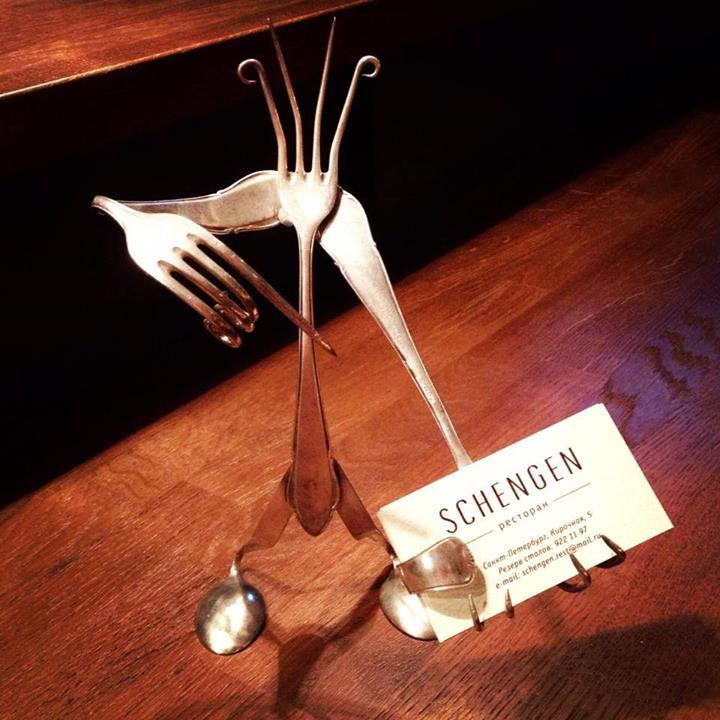
“Since last May (2013), Russia has its own ‘Schengen’. It’s a place where you can go for pleasure or business. It’s a restaurant in Saint Petersburg. The restaurant is located not far from the Finnish Consulate, where the owner goes to get “the cherished Schengen visa.” Hence the name. But there is more to it than pure happenstance. The reference to ‘Schengen’ is meant to evoke the cosmopolitan aura that Europe’s area of free movement is supposed to project, together with other related ‘progressive’ notions such as open-mindedness, sophistication, and freedom. This spin is not that surprising. After all, the purpose of any act of ‘branding’ is to sell a product to a customer, and thus the product should be associated with something positive. In the eyes of the management, ‘Schengen’ is supposed to do the trick.

And the trick seems to work. According to one reviewer, Schengen is “a new location for smart people.”. In terms of menu, another reviewer notices how “at first (it) seemed concise to the point of being a bit parsimonious” (these stingy Europeans!), although the overall experience is one of “visa-free satisfaction”. Schengen’s design as well is quintessential European. It has in fact a “slightly Germanic feel” but it “bring(s) together influences from different parts of Europe into an effortlessly harmonious whole”. (Well, “slightly Germanic feel” might be a bit of understatement when we look at Europe today; in turn, the Old Continent is all but “effortless” and “harmonious” these days, but you get the picture…)

From its clientele to its look, Schengen (the restaurant) thus seems to uncannily represent a microcosm of Europe’s border free area, or at least what European policy-makers would like to present outside the region. In this sense, Schengen (the restaurant) is not unique. There are other examples of businesses with topographical names reminiscent of a location that is different from the one where that business actually lies. It is arguably one of the most common practices in the hospitality industry. After all, almost all respectable cities around the world have a ‘London’ or ‘Paris’ restaurant, even if these establishments are located neither in England nor in France. The Schengen restaurant is also not the only bearing a name of topographical entity that does not actually exist. (We should keep in mind that formally ‘Schengenland’ is not a political entity that we can find on a map; in EU legal documents, the reference is still to the territory of member states). Cities are replete with hotels bearing the names of fictional locations, including mythical ones (for example, ‘Paradise’, ‘El Dorado’).

What distinguishes the case of the Schengen restaurant is that it refers to both a real and a fictional entity. The restaurant’s name in fact refers to something that simultaneously does and does not exist. In this context ‘Schengen’ is something real because, according to those who chose this name, its referent object is an existing political entity with defined ‘commonsensical’ features; however, it is also  fictional, because this political entity does not formally exist, or at least it does not necessarily exist in the way the management of the restaurant thinks it does. Ready to go to Schengen? Check its menu first, there might be surprises…”

Bad omens, good omens: how does a restored Schengen look like?

Ouch! Schengen is in trouble…

On May 10, 2016, the museum created to celebrate the Schengen regime—evocatively located in the eponymous Luxemburg town by the river Moselle—was damaged by the collapse of one of its ceilings. Happening in the midst of the Syrian refugee crisis, it was an eerie omen of the regime’s current predicament. Indeed, an increasing number of cracks have begun to appear in what is still considered a central pillar of European integration. The breakdown of the Dublin Convention arrangement brought about by the sudden flow of Europe-bound migrants and the ensuing squabbles over the EU-led redistribution of asylum seekers across the continent, together with the reintroduction of internal controls, have rattled the regime’s foundations. A rising populist backlash against the idea of a “border-free Europe” has also brought into question the regime’s raison d’être and challenged its legitimacy.  In this context, it is not surprising that references to “the end of Schengen” have become ubiquitous.

Schengen restored…for now

In all this doom and gloom, finally some good news. After a year long hiatus, the Schengen museum has just reopened, and patrons are once again able to marvel at the regime’s accomplishments. Can the (real) Schengen follow the same path and return to its original shine? Well, maybe it can. After all, it is not the first time the Schengen regime has experienced periods of turmoil. In the early 1990s, for instance, the French government’s recalcitrance to fully lift internal controls at its borders stalled the regime’s  launch. While the possibility exists that the reinstatement of internal border controls within the Schengen area may become permanent, the European Commission and all member states have confirmed their commitment to lift these checks once the emergency period is over. Moreover, there are signs that the current crisis might actually lead to the regime’s further integration, as the recent upgrading of EU border agency Frontex suggests.

The strongest argument in support of the Schengen regime, however, is that even if it were to collapse, the need for European governments to address migratory pressures on Europe would not disappear. Unilateral actions such as the permanent reinstatement of national border controls might replicate the phenomenon of The Jungle, the notorious makeshift camp erected—and disbanded in October 2016—in the Northern French city of Calais. A Europe-wide “Jungle effect” would be politically untenable. It is therefore difficult to foresee a solution that does not involve at least a modicum of cooperation among European governments and some level of coordination from EU institutions. In other words, the most likely scenario in the case of the regime’s collapse is a Schengen redux. Such an arrangement would resemble the current one, but with its priorities reversed. The strengthening of external borders, hitherto considered a compensatory measure to balance the lifting of internal ones, would become the primary objective. A border-free Europe would remain a desirable outcome worth pursuing, but not if this meant compromising security. This shift of priorities is already apparent in the current post-crisis context; yet it is, at least on paper, only temporary and ad hoc. In the Schengen redux scenario outlined here, it would be become official and permanent.  This new arrangement would also be less institutionalised, with more emphasis on enhanced cooperation. One of this scenario’s downsides is that, since the lifting of internal borders is dependent on the strengthening of external ones, Schengen would compromise its primary source of legitimacy, namely its close connection with the European integration project. By diluting this historical tie, the political will to keep Schengen alive, even in the form of “Schengen-light,” would be seriously reduced.

European policymakers would certainly welcome a Schengen’s ‘restoration’ along the lines of the real-life entity the museum celebrates. They would also be pleased if the “renovations” they are currently considering work out well, and if they do not turn out to be mere temporary patches. If the latter turns out to be the case, another serious incident affecting the Schengen regime might offer them no choice but to demolish its entire structure[i].

***


[i] This post is a (revised and updated) excerpt from a chapter on EU border management that I wrote for  Routledge’s Handbook of Justice and Home Affairs Research (edited by Ariadna Ripoll Servent and Florian Trauner)

Mapping Schengen Art – Part VII

Here is the seventh instalment of Schengen border art, an ongoing project in which I map the multifarious ways in which the Old Continent’ (real and imaginary) frontiers have been represented/performed/subverted.


Freedom Bus Project – Crossborder – International Network of History and Art (2015)


http://www.cross-border-network.eu/freedombus-home.php


Art Bridges Europe – AA.VV. (Itinerant multimedia project 2015)


https://artbridgeseurope.wordpress.com/


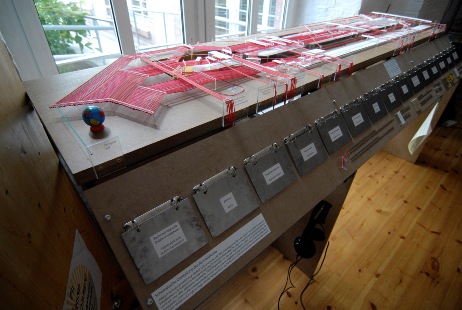
Residenzpflicht – The invisible borders – Philipp Kuebart (2012-14, exhibition)

berlin_DSE6182_fadenmodell


http://www.invisibleborders.de/main_en.html


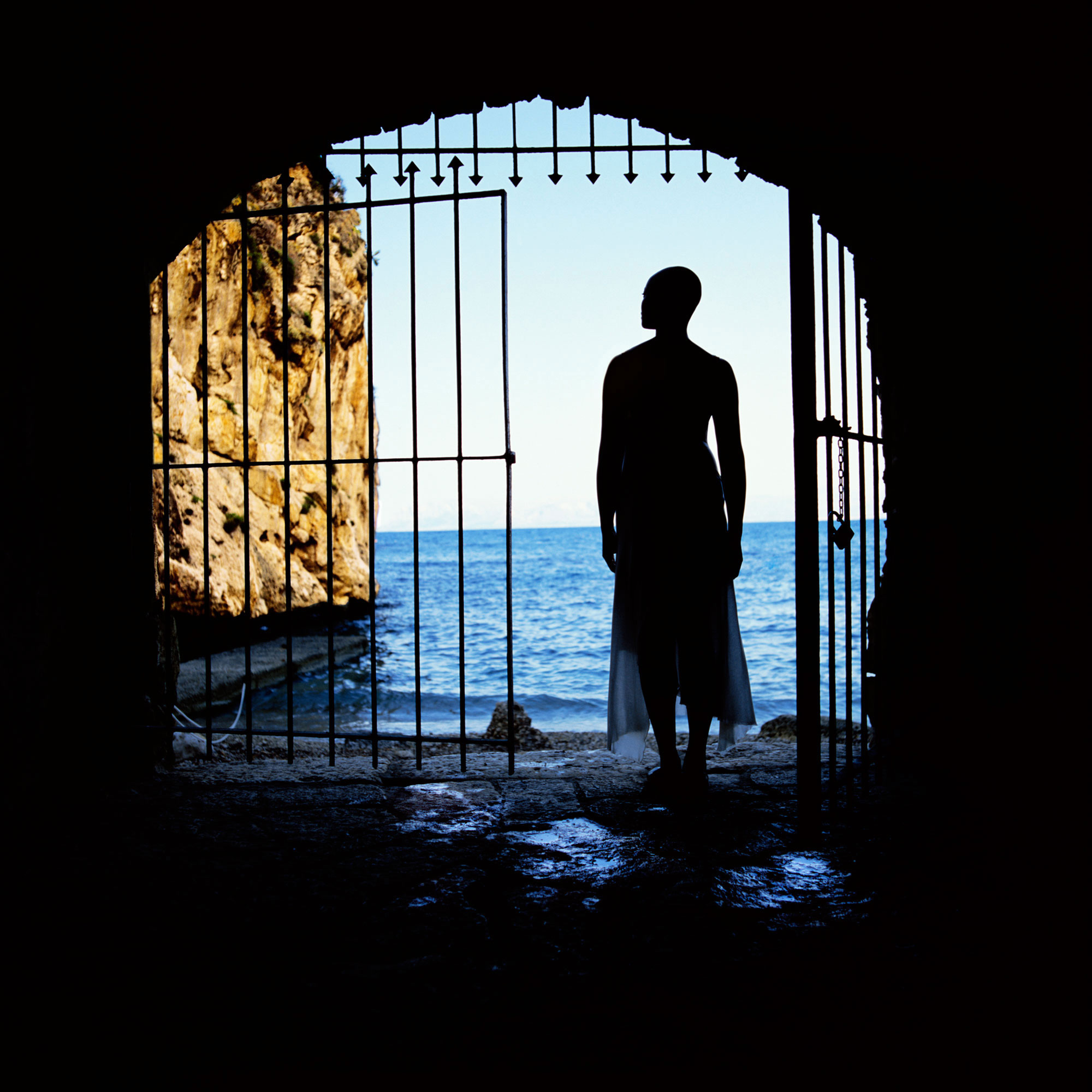
The Mediterranean Tunnel  – MTO (street art, 2015)

Med tunnel


“The Mediterranean Tunnel” by MTO in Malta & Italy


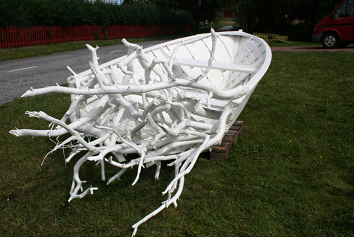
Immigration –  Daniel Garcia (2015; mixed media)

Daniel-Garcia-Art-Immigration-Africa-Europe-Boats-Migration-Mediterranean


Immigrants


Surprising Europe – African migration experiences (multimedia project ; 2013)

http://www.surprisingeurope.com/


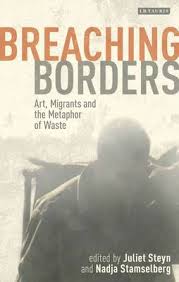
Breaching Borders: Art, Migrants and the Metaphor of WasteSteyn and Stamselberg (book; 2014)
Breaching borders


http://www.ibtauris.com/Books/Society%20%20social%20sciences/Society%20%20culture%20general/Cultural%20studies/Crosscultural%20Identities%20Art%20Migrants%20and%20the%20Metaphor%20of%20Waste.aspx?menuitem=%7B4BBEF2AD-7935-412A-ADEC-60A9409023F6%7D


Mapping Schengen Art – Part VI

Here is the sixth instalment of Schengen border art, an ongoing project in which I map the multifarious ways in which the Old Continent’ (real and imaginary) frontiers have been represented/performed/subverted.

White Crosses – Centre for Political Beauty (Art installation, 2014)

ZPS_Add_Exp-2

http://www.politicalbeauty.com/wall.html

Bordergame – National Theatre Wales (2014, live/online performance, role-play)

Bordergame by National Theatre Wales

http://nationaltheatrewales.org/bordergame

Borrando La Barda/Erasing the Border – Ana Teresa Fernandez (2001, visual performance)

EU-MAN – European Union Migrant Artists Network (1997)

EU- Man pic

http://www.eu-man.org/index.htm

And to conclude, some Schengen pop culinaria…

Schengen Restaurant – Delhi

The Indian Schengen

The Indian Schengen

Echoes of Europe in a review of Delhi’s Schengen restaurant:

“Schengen is unmissable, with its bright lights, all-white exterior… (…). Yet as you enter there is a nagging sense that there is way too much space. (…) Schengen is a massive space to fill…”

Mapping Schengen Art – Part V

Here is the fifth instalment of Schengen border art, an ongoing project in which I map the multifarious ways in which the Old Continent’ (real and imaginary) frontiers have been represented/performed/subverted..

Isaac Julien – Western Union: Small Boats (The Leopard) (Video Installation, 2014)

Isaac Julien, “Western Union Series no. 1 (Cast No Shadow)”

http://www.isaacjulien.com/installations/smallboats

Mimmo Paladino – Porta di Lampedusa, Porta D’Europa (sculpture, 2008)

Paladino Lampedusa

http://www.spiegel.de/international/europe/africans-remembered-a-memorial-for-europe-s-lost-migrants-a-560218.html

Lena Malm, Sarah Green – Borderwork: A visual journey through periphery frontier regions (2014 photo-book)

jasilti_border-kannet-1070_large

http://www.jasilti.com/se/borderwork-bok

The Splendours and Miseries of the Schengen Zone (theatre performances, Riga, 2014)

Eurovision1

http://www.riga2014.org/eng/news/52867-the-splendours-and-miseries-of-the-schengen-zone-in-four-plays

Schengen Schege (band, Brussels)

Malik Nejmi  – “4160″ (video installation, 2014)

Mapping Schengen Art – Part IV

Here is the fourth instalment of Schengen border artan ongoing project in which I try to map the multifarious ways in which the Old Continent’s (real and imaginary) frontiers have been represented/performed/subverted.


Blue in Morocco – Blue (2012, wall art)

Blue artist


http://www.madnesswall.com/2012/04/blu-in-morocco-new-wall-near-spanish.html


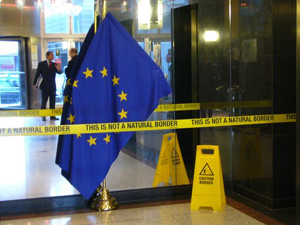
Caution border – AA.VV. (2009, installation)

Brussels - art 2


http://www.cultura21.net/karamoja/html/art/index.php


Without borders? – Kontekst and h.arta (2009, exhibition)

main-julius1


Exhibition


Undocumented Apparel – Julio Salgado (2012, illustrations)

uni_salgadoundocumentedapparel_wmain


http://juliosalgadoart.bigcartel.com/


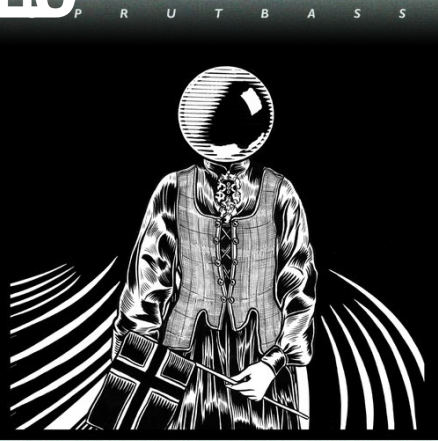
Schengen-Funk – Sprutbass (2013, music)

Sprutbass


http://www.nofearofpop.net/blog/sprutbass-schengen-funk-melkeveien-remix


Mapping Europe’s border art – Part III

Here is the third instalment of Schengen border art, an ongoing project in which I try to map the multifarious ways in which the Old Continent’s (real and imaginary) frontiers have been represented/performed/subverted.


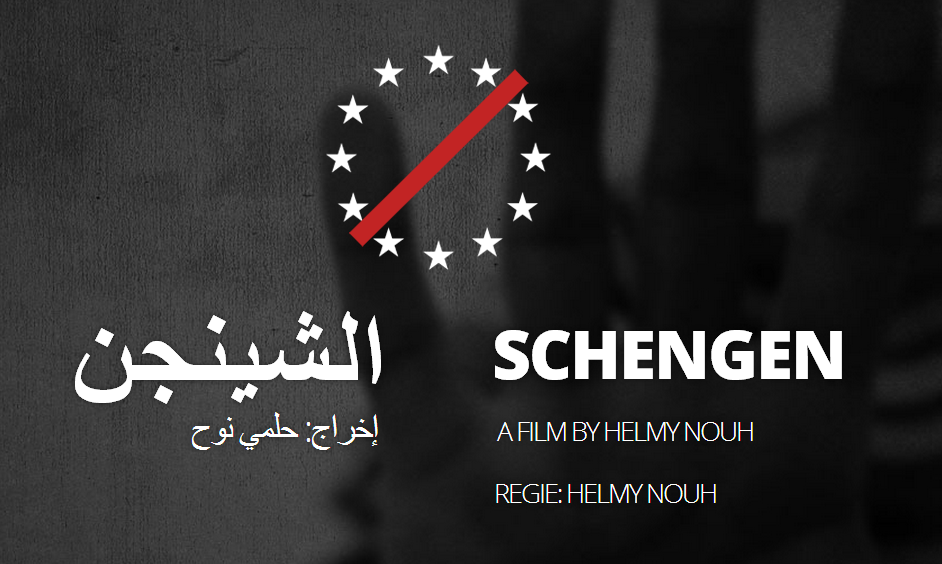
Schengen – Helmy Nouh (2013, film)


Schengen film


http://schengenfilm.com/


Migrants moving history: Narratives of diversity in Europe (2007, documentary)


Migrant Moving history


http://www.migrants-moving-history.org/documentary.htm


The list – Banu Cennetoglu (2006, installation)


banu_cennetoglu_listamsterdam


http://edno.bg/en/sofia-contemporary-2013/program/759


Permanent Waiting Room (2008, Installation)


Container


http://www.kitch.si/livingonaborder/node/7


Melilla – Flo Razowsky (2007, photos)


detentionyard_spain_border_ceti_melilla_1207_BW_small


http://www.lightstalkers.org/galleries/contact_sheet/9398


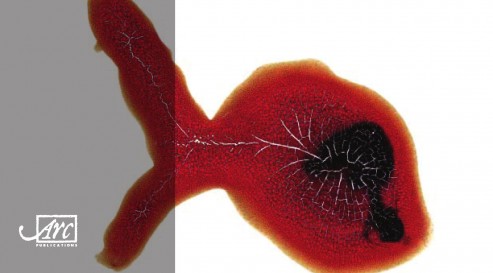
New Voices from Europe and Beyond’ – ARC Publications/ Literature Across Frontiers (Poetry Anthology Series)


Catalan-Poets-front-cover-cropped-493x273


http://www.lit-across-frontiers.org/activities-and-projects/project/new-voices-from-europe-and-beyond/


Mapping Europe’s border art – part II

In my previous post I presented the project Schengen border art. What follows are some more examples of creative representations and performances of/about European frontiers. Enjoy!


There is no place – Lisl Ponger (2007, photographs)

There is no place


http://www.grenzlinien.com/lisl-ponger.htm


Foreigners registration office – Ximena Aburto Felis (2007, video)

Foreign registration


http://www.endloop.org/videos.html


Blue Wall of Silence – Vibeke Jensen (2007, installation)

BWStuesday3s


http://www.thing.net/~vibekeie/bluewall_index.htm


Frontiers – You’ve reached Fortress Europe (2008, videogame)

Fortress Europe game


http://www.frontiers-game.com/


Schengen – Raphael Haroche (2006, song)

Rafael Schengen


http://www.youtube.com/watch?v=m9UG-ejy6g8

Mapping Europe’s border art – a project

Art and other creative expressions about European borders have been a recurrent theme in this blog. So much so that I have decided to launch a new side project specifically dealing with this topic. After all, isn’t the end of the year a time for new resolutions? The tentative title of this endeveour is ‘Schengen border art’, and I am planning to develop it in the upcoming months. The goal is to map contemporary artistic performances whose main subject is the Old Continent’s frontiers, be it the ‘real’ boundary demarcations in the political, social, economic realms or their imagined projections, and in the people who cross, build or challenge them on a daily basis. These artistic performances can take different forms: from novels, poems and paintings to photographs, videos, sculptures, land art, simulations, installations, theatrical and other types of  ‘live’ performances. The number of these artistic expressions has mushroomed in recent years as a result of the growing interest in (and controversy over) Europe’s borders and their management. Below you will find a preview of this body of work. And stay tuned for updates on this project!

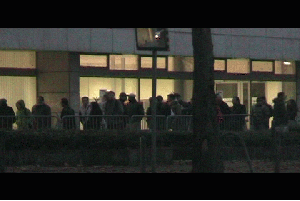
After Schengen – Ignacio Evangelista (2013)

th-17_pl-cz

http://ignacioevangelista.com/index.php?/seleccion-natural/work-in-progres-after-schengen/


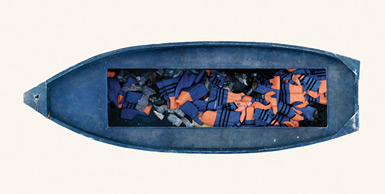
Maritime Incidents – Heiko Schäfer (2008).

schaefer04-k

http://www.heikoschaefer.de/projects/start/maritime_incidents.html


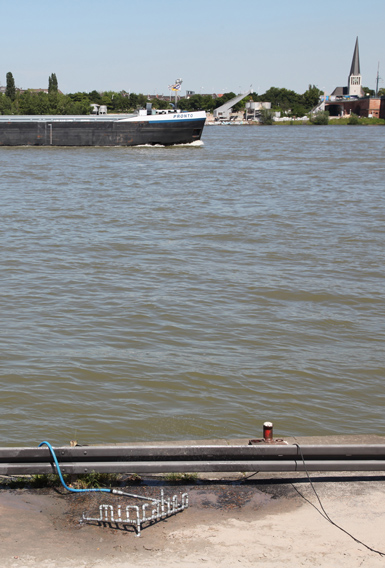
Migration, Installation – Raul Gschrey (2010)

gschrey02


http://www.grenzlinien.com/raul-gschrey.htm


Memorabilia – Sabina Shikhlinskaya (2012)

IMG_4967-n_small-200x300


http://transkaukazja.de/?p=333&lang=en


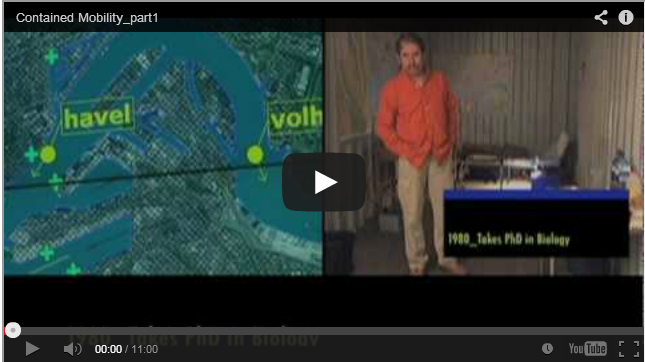
Contained Mobility – Ursula Biemann (2004)

Capture


http://www.geobodies.org/art-and-videos/contained-mobility


Fortress Europe – Asia dub foundation (2003)

Asia Dub foundation


http://www.youtube.com/watch?v=eMXKt99W61A

***

Jurmala’s ghosts and the Haunted Houses of Schengen

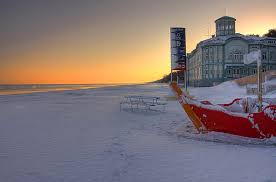
imagesHalloween. The time when the undead come to town. And when boarded up haunted houses start making eerie sounds and come alive. This year, however, not all of them seem that decrepit and spirited. Some in fact remain relatively quiet. These are the haunted houses of Schengen. Haunted, yet  alluring. Indeed, they can be quite luxurious.  They also do not appear in creepy places (So no Castles in Transylvania – not yet. at least, for Romania is still waiting to join Schengen…). On the contrary, they rise along swanky neighborhoods or exclusive beach resorts. Who lives there? Hmmm, good question. If we had an answer, these houses would not be haunted… A more pertinent question is: why would anybody in their sane mind be so foolish as to own such as a ghostly abode?  Wait a minute: it’s Schengen, stupid! Yes, what makes these architectural ghosts so attractive is that they happen to be in the most sought-after place on earth, namely Europe (Yes, some find the decadent Old Continent still attractive!). And if you are not a European citizen and require a visa to enter Eurodreamland, then why not buy your way into paradise by claiming a fictitious residence there? And here enters Jurmala, the Latvian resort city by the Baltic Sea. In 2010, the Latvian government introduced a program that allows foreign citizens to acquire residency in the country if they are willing to invest at least 71,000 euros. Minimum requirement to maintain residency: have a local address (an apartment in Jurmala sounds good!) and be there one day per year (yeah, the day the haunted houses of Schengen come alive!). And who cares about the sandy beaches (The Baltic sea is not the Caribbean after all). With a local residency in your pocket, the doors of Europe are open to you! No more hassle at EU embassies! No more dealing with these callous and ungrateful European officials! To good to be true. Indeed, in three years, around 7,000 ‘zombies’, mostly well-healed Russians, Chinese and Kazakhs, have taken advantage of this unique opportunity. But like everything else, good things are bound to come to an end. Latvia is now feeling a bit of pressure from its EU partners (should we blame them?) to close this loophole. And they might have another reason to do so. Purportedly, the rationale for this program is to encourage money flows into the country. Yet this money is often laundered and sent back to the ghost’s (ehmm, resident’s) country of origin. So much for Latvia’s gains! None should that surprised then if this year’s Halloween might seal the program’s fate: R.I.P the Haunted Houses of Schengen!

JMCBorderControl

This is the profile of Ruben Zaiotti, Jean Monnet Chair in Border Control at Dalhousie University

Jean Monnet Chair in Border Control

Jean Monnet Chair Border Control

Pop Theory

Thoughts on Ideas

Alberto Gambino

albertogambino.eu

ceetorncurtain

The greatest WordPress.com site in all the land!

Refugee Archives @ UEL

news and developments

The Human Tsunami

Reflections on the migration across the mediterranean, and its intersections with the Arab Spring and Eurozone crises.

Detained in the UK

A blog by Samphire about asylum & immigration detention and destitution in the UK.